Water Activated Tape vs Regular Packing Tape: Which Is Better for Heavy Boxes?
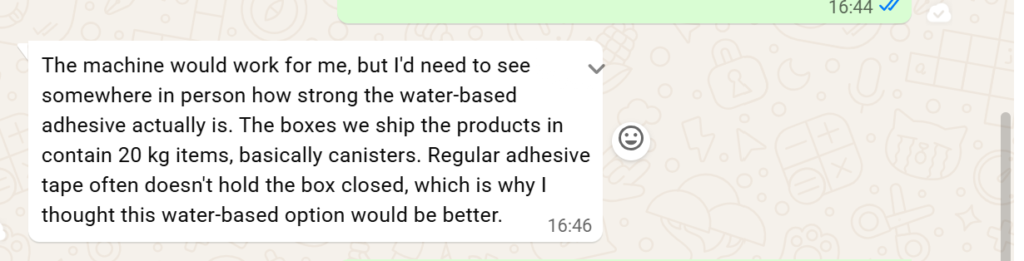
Today, a customer asked me whether water activated tape could replace regular plastic packing tape for 20 kg cartons.
His problem was very practical: the products inside the cartons weigh around 20 kg, and ordinary adhesive tape sometimes cannot keep the boxes securely closed during shipping.
At the same time, he is also considering a more paper-based packaging solution as sustainability requirements, packaging waste regulations, and Extended Producer Responsibility (EPR) become more important in many markets.
So this raised a very practical question:
Is water activated tape actually stronger than regular packing tape — and is it a better long-term choice for heavy-duty and sustainable packaging?
The short answer is:
For heavier cartons and demanding shipping conditions, water activated tape is usually a better sealing solution than ordinary transparent packing tape.
But there are some important details to understand before making the switch.
What Is Regular Packing Tape?
Regular transparent packing tape is usually made from BOPP plastic film with a pressure-sensitive adhesive.
You press the tape onto the carton surface, and the adhesive sticks to it.
It is popular because it is:
- inexpensive
- easy to use
- widely available
- suitable for handheld dispensers
- fast for everyday carton sealing
For light and medium-weight parcels, regular packing tape works perfectly well in many situations.
The problem normally appears when carton weight increases or transportation conditions become more demanding.
The adhesive mainly sticks to the surface of the carton.
If the carton is dusty, recycled, rough, cold, humid, or under constant stress during transportation, the tape may gradually lift or lose adhesion.
This was exactly the problem my customer was facing with his 20 kg cartons.
What Is Water Activated Tape?
Water activated tape, also called gummed tape, is normally made from kraft paper coated with a water-activated adhesive.
The adhesive is activated by water before the tape is applied to the carton.
The important difference is how it bonds.
Regular plastic tape mainly sticks to the surface.
Water activated tape bonds much more closely with the paper fibers of the corrugated carton.
After drying, the tape and carton effectively become more integrated.
That is one reason water activated tape is commonly considered for:
- heavy cartons
- export shipments
- industrial packaging
- long-distance transportation
- valuable products
- tamper-evident packaging
Water Activated Tape vs Regular Packing Tape: Which Is Stronger?
For most heavy carton sealing applications:
Water activated tape generally provides a stronger and more secure carton seal than standard pressure-sensitive plastic tape.
But I would not tell a customer:
“Water activated tape can definitely hold 20 kg.”
That statement is too simple.
The tape itself does not carry the entire weight of the box.
The carton structure carries the load.
The tape’s job is to keep the flaps securely closed and maintain the integrity of the carton.
The final performance depends on several factors:
- carton board quality
- box dimensions
- product weight
- tape width
- tape grade
- reinforced or non-reinforced tape
- sealing method
- temperature
- humidity
- transportation vibration
- drop and impact conditions
So a better question is:
Can water activated tape create a more reliable seal for a 20 kg carton than ordinary packing tape?
In many applications, the answer is yes.
Why Is Water Activated Tape Better for Heavy Cartons?
- Stronger Bond With the Carton
This is the biggest difference.
Pressure-sensitive tape sticks mainly to the outer surface of the carton.
Water activated adhesive interacts with the carton paper fibers.
Once the adhesive dries, removing the tape often damages the outer layer of the carton.
This stronger bond can help prevent the carton flaps from opening when the box is subjected to vibration, stacking pressure, or repeated handling.
For a 20 kg carton, this can make a meaningful difference. - Better Tamper Evidence
Water activated tape also provides better evidence of tampering.
If someone removes ordinary plastic packing tape carefully, the carton may sometimes be resealed without obvious damage.
Water activated tape behaves differently.
Because the adhesive bonds with the carton surface, removing it usually tears or damages the paper fibers.
That makes unauthorized opening much easier to detect.
This can be useful for:
– electronics
– industrial parts
– pharmaceuticals
– premium products
– export goods
– valuable e-commerce shipments - Cleaner Packaging
This is not only about strength.
Appearance matters too.
Sometimes I see cartons sealed with three or four overlapping strips of transparent tape because one strip is not strong enough.
It works, but it does not look professional.
A single kraft-colored water activated tape strip can often give the carton a much cleaner appearance.
For brands that care about presentation, this can be another advantage.
What About Reinforced Water Activated Tape?
This is especially important for heavy cartons.
There are generally two types worth discussing:
Standard water activated tape
and
Reinforced water activated tape
Reinforced tape contains reinforcement fibers that improve tensile strength.
For heavier goods, industrial parts, or demanding export shipments, I would usually evaluate reinforced tape first.
Typical applications include:
- metal components
- machinery parts
- automotive parts
- furniture components
- industrial products
- high-value export cartons
So if a customer tells me:
“My carton weighs around 20 kg.”
My next question would not simply be:
“Do you want water activated tape?”
I would ask:
What carton are you using, what tape width do you need, and what transportation conditions will the box experience?
That gives a much more useful answer.